Layers of history are wrapped in this Antique Currier & Ives Lithograph! The landscape was designed by Frances Flora Palmer (1812-1876), a female staff artist at Currier & Ives. This print is called "The Old Oaken Bucket" and features poetry by Samuel T. Woodworth at the bottom. The hand-colored print alone features many hidden moments of beauty to discover.
Collector's Notes:
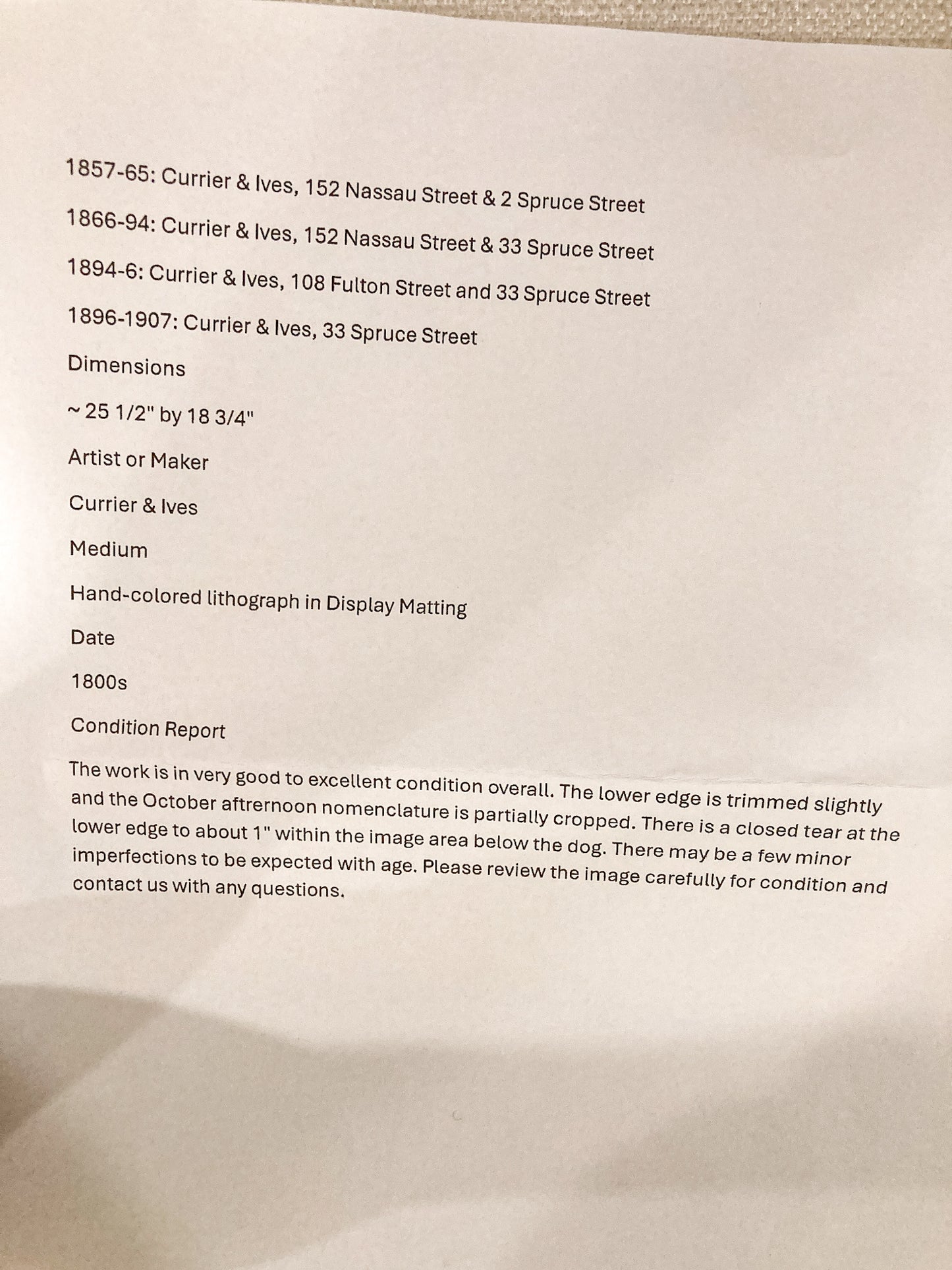
Framed Antique Lithograph from Currier & Ives, The Old Oaken Bucket by Frances Flora Palmer. Published in 1864 by Currier & Ives at 152 Nassau St. New York. Includes two stanzas and 4 lines of verse by Samuel T. Woodworth. Original artwork by Frances Flora Bond Palmer.
Condition: Good
Expected wear for age; slight staining around edges. Not observed outside of frame. Inspect images and video.
Overall Size: 30" x 35"
In-Store Pick Up Preferred. Please call or contact us for an accurate shipping quote, a USPS estimate is shown at checkout. Other carriers are available and may be more or less depending on your location.
When Frances Palmer moved to New York from England in 1844 she was an accomplished artist and printmaker. Nathaniel Currier recognized Palmer's talent and began to buy her drawings to use as print designs. After Currier & Ives was established in 1857 she became a staff artist. As a designer able to transfer images to lithographic stones for printing, Palmer produced more than 200 prints for the firm and today is regarded as a leading woman lithographer of the period.
Currier & Ives was a prominent American printmaking firm active from 1834 to 1907, known for their hand-colored lithographs depicting various subjects including landscapes, historical scenes, portraits, and everyday life in 19th century America. This New York publishing firm produced over 7,000 different lithographs and was one of the most prolific printmakers of the era. Their prints were widely popular and affordable, making them accessible to a broad audience. They are often referred to as "Printmakers of the People."
The majority of plates produced were hand-colored lithographs using premium materials to produce their prints including stones from Bavaria, where lithography was invented. They imported lithographic crayons from France and colors from Austria.
This work is held in the collections at the Metropolitan Museum of Art, the Yale University Art Gallery, and the Gilcrease Museum in Tulsa, Oklahoma.