If you enjoy theater, you may enjoy the works of Japanese Artist, Tsukioka Kogyo (1869-1927). Kogyo's woodblock prints captured the performance art of Noh, a dance-drama performed since the 14th Century. Masks, elaborate costumes, expressive movements, and traditional tales continue to captivate audiences today. Depicted in this print is a scene from the Spring play, Arashiyama where the gods protect the mountain's Cherry Blossoms. Spark conversation in any room with this framed artwork!
Collector's Notes:
Antique Tsukioka Kogyo (1869-1927) The Goblin of Kurama Framed Japanese Wood Block Print; signed on right side. Likely printed in 1898. This print is from the Noh drama by Seami, Kurama-Tengu. It is the fifth play in the Noh genre and takes place on Kuramayama, the "Saddle Horse" or "Rappenberg" (Rapp Mountain) in northern Kyoto, with its dense, dark forest. It features a relatively large cast of characters
Condition: Excellent
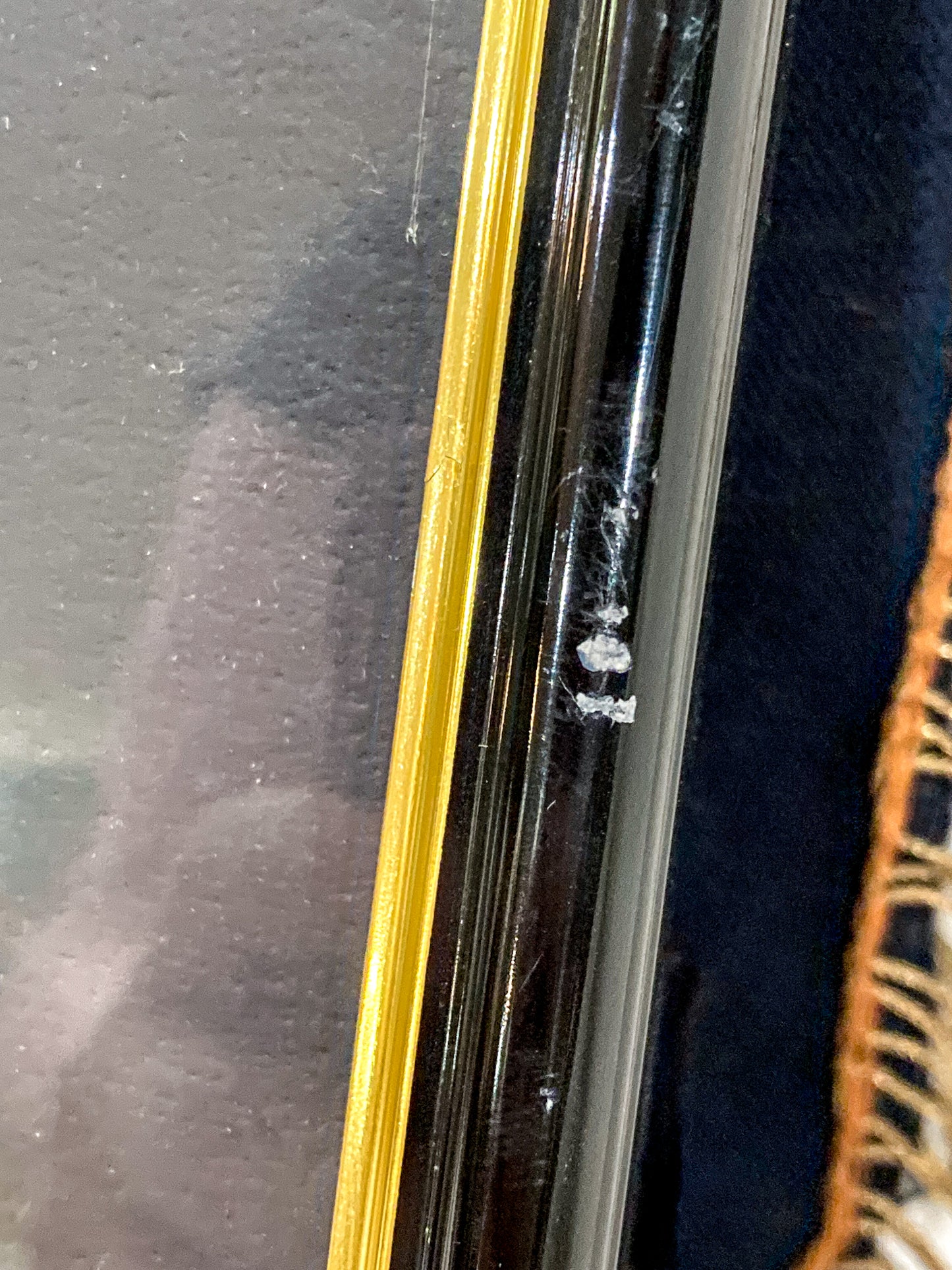
Expected wear for age; 2 rips in top left and top middle. Not examined outside of frame. Frame has areas of scuffing and scratching. Inspect images and video.
Overall size: 15" x 19" x 1"
Tsukioka Kogyo, Japanese (1869-1927)
Tsukioka Kogyo prints are known for their incredible detail in capturing the costumes, masks, and props of Noh performances, often including deluxe embellishments like mica and embossing. Kogyo was a woodblock print artist, painter, and illustrator who brought the theatrical art of noh to life through rich, painterly colors and shimmering costumes. While he is best known for scenes of the noh stage, he also produced some war prints and nature studies. Born in Tokyo in 1869 as Hanyu (Sakamaki) Bennosuke (sometimes read Sadanosuke), Kogyo was the son of an innkeeper in the Nihonbashi district.
Kogyo's interest in noh theater first began in his late 20s. At this time, the traditional theatrical art was actively redefining itself for the modern era. Shaking off its aristocratic associations, Noh expanded its audience, both to the greater public in Japan and internationally, through the visits of foreign dignitaries. As the audience of noh grew, Kogyo broke new ground in the depiction of noh subjects. Rather than foregrounding the actors’ personas, Kogyo creates a subtle sense of the stage and set to capture the fleeting moments of a live performance. By the time of Kogyo’s death in 1927, noh theater had secured a significant standing in popular culture.
Source:
www.roningallery.com/artists/Kogyo
Read about the whole play here: https://www.the-noh.com/en/plays/data/program_025.html